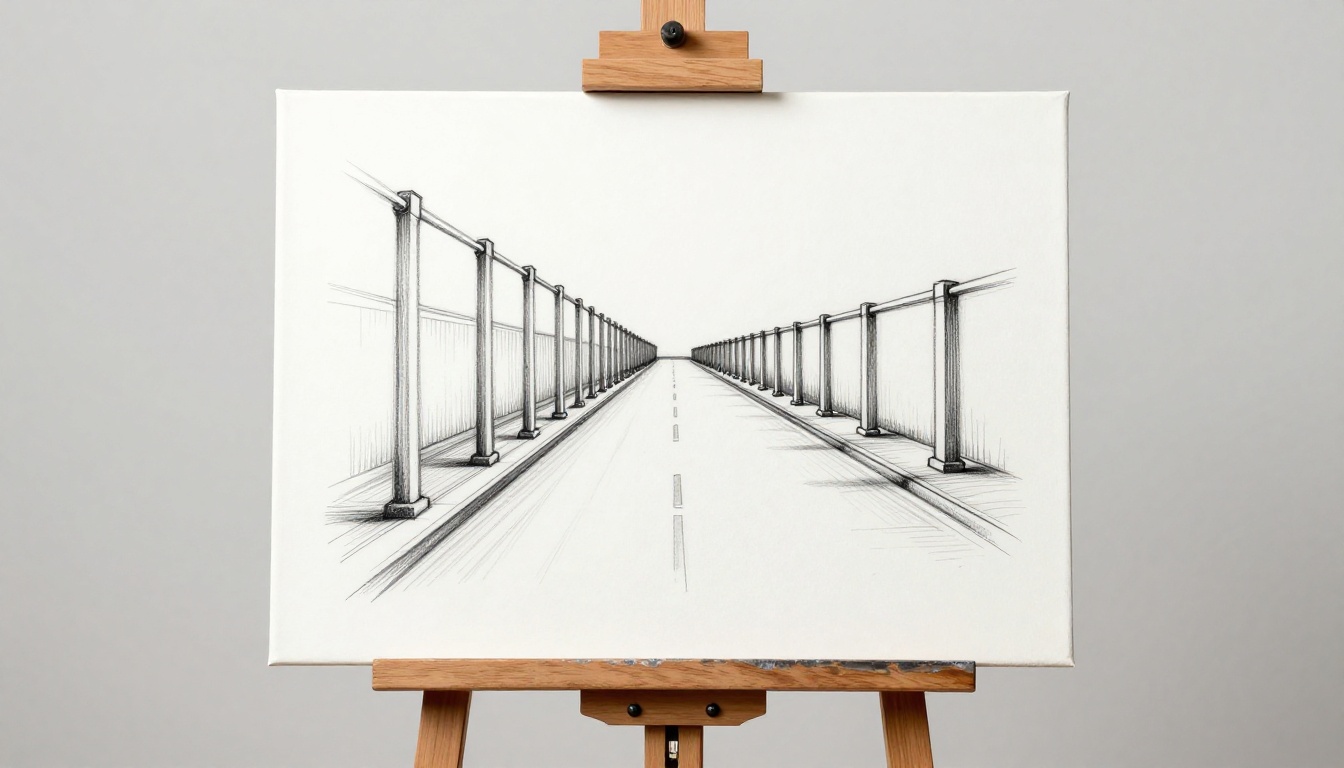
Have you ever stared at a painting that pulled you right into its world? It feels like you could step through the canvas. That’s perspective at work. Artists use this technique to turn flat surfaces into scenes full of depth and distance.
Perspective mimics how our eyes see the real world. Objects shrink as they move away. Lines converge in the distance. This creates a convincing illusion of three dimensions on two-dimensional paper or canvas. Without it, art looks flat and lifeless.
You might wonder how this simple trick changed everything. Renaissance masters like Brunelleschi perfected it. Today, it powers video games and VR. In this post, you’ll see the main types, its history, and why it grabs viewers. Plus, famous examples and tips to try it yourself. Let’s explore how perspective makes art breathe.
Breaking Down the Core Types of Perspective
Artists rely on a few key types of perspective. Each one adds depth in its own way. They often combine them for realistic results. Beginners sometimes mix them up because linear feels precise while others rely on mood.
Linear perspective uses math and lines. Atmospheric and color versions play with air and light. Together, they fool the eye perfectly. For example, think of a city street. Lines guide you back while haze softens far buildings.
Linear Perspective: Lines That Trick Your Eye
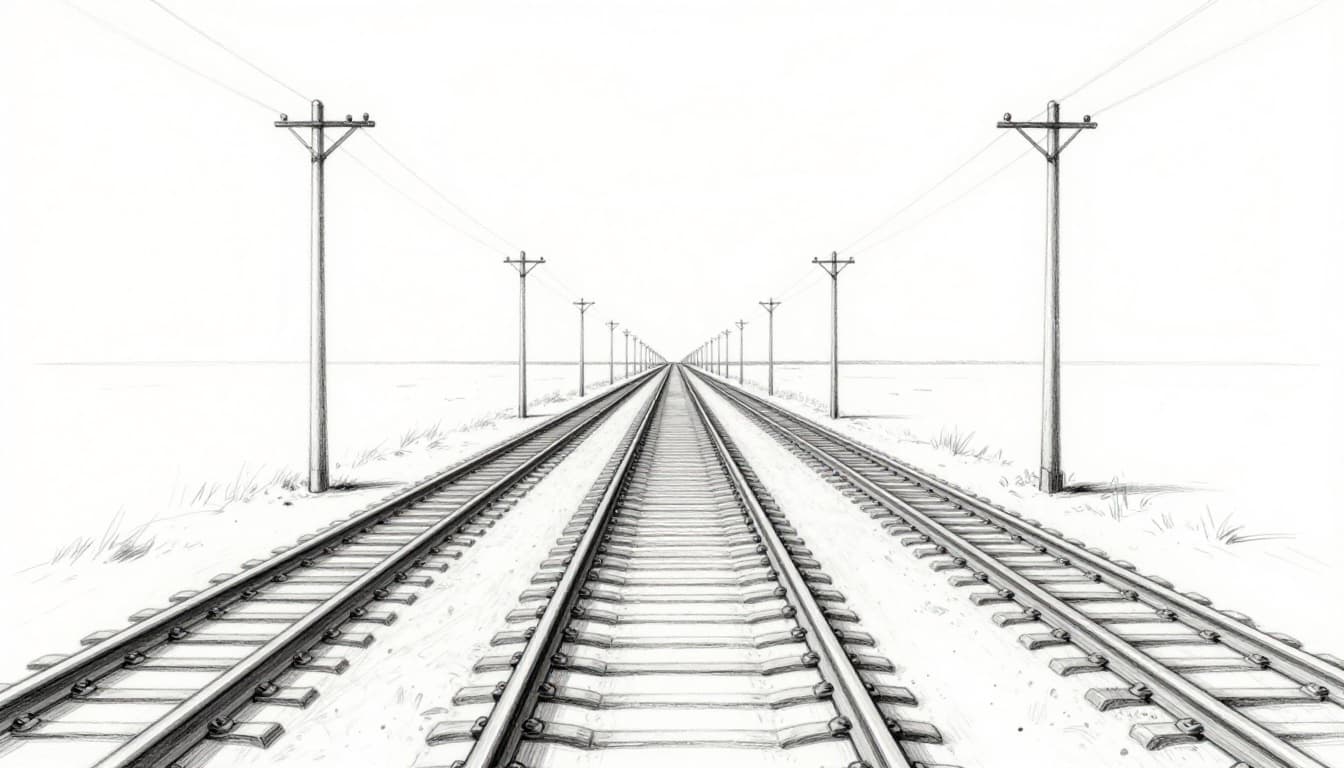
Linear perspective starts with a horizon line. All parallel lines meet at a vanishing point there. This math makes rooms or roads look deep.
Picture railroad tracks stretching away. They seem to squeeze together far off. Telephone poles along the sides get smaller. That’s one-point perspective. You face the scene straight on.
In two-point perspective, you view a corner. Lines from each side hit separate vanishing points. Buildings tilt dynamically. Foreshortening shortens objects aimed at you, like an arm thrust forward.
Artists plot these with rulers first. Then they shade for roundness. Mistakes happen when points drift. Check your lines against the horizon. Learn more about linear versus atmospheric approaches here.
Atmospheric and Color Perspective: Fading into the Distance
Atmospheric perspective uses air’s effects. Far objects blur with haze. They lose detail and contrast. Blues and grays dominate because moisture scatters light.
Close items stay sharp and saturated. Mountains in the background fade soft. Foreground rocks pop vivid. Color perspective adds to this. Warm tones like reds pull forward. Cool blues recede.
Sunsets show it best. The sun glows orange near, but sky deepens to purple afar. Artists layer glazes for this. In contrast, linear sets structure. Atmospheric gives mood. Both create believable space.
How Renaissance Artists Revolutionized Art with Perspective
Medieval art stayed flat. Figures floated without depth. Then the Renaissance flipped that. Filippo Brunelleschi sparked it around 1415.
He mirrored Florence’s baptistery. Peep through to match the real view. Crowds gasped. It proved geometry could copy sight. Masaccio grabbed the idea fast. His Holy Trinity fresco fakes a chapel vault. Viewers feel inside the scene.
Leonardo da Vinci refined it. He studied eyes and added soft atmospheres. Andrea Mantegna twisted angles bold. Albrecht Dürer spread rules north. Raphael peaked with School of Athens. Arches barrel back to philosophers.
This shift amazed people. Art told stories deeper. Churches drew worshippers in. Rules came from ancient Rome, rediscovered. Smarthistory details Brunelleschi’s key experiment. Perspective made paintings windows to other worlds.
The Big Reasons Perspective Brings Art to Life
Perspective builds realism first. It fools your brain into seeing volume. A hallway pulls your gaze deep. You sense space.
It guides emotion too. Lines lead eyes to key spots. In a portrait, depth isolates the face. Viewers connect stronger.
Composition flows better. Overlapping and scaling balance the frame. Chaos turns orderly. Ever felt drawn into a painting? That’s immersion at play.
Depth sparks stories. Foreground hints at journeys ahead. It mirrors life. Artists use it to stir wonder or calm. Without perspective, scenes fall flat. With it, art lives.
Iconic Masterpieces That Nail Perspective
Raphael’s School of Athens shines. The vanishing point lands on chatting philosophers. Arches frame Plato and Aristotle. Steps recede perfect. It feels like a grand hall.
Masaccio’s Holy Trinity stuns. Christ hangs in a barrel vault. Donors kneel below. The math makes walls wrap around you. It pulls faith close.
Da Vinci’s Last Supper uses lines from windows. They meet at Christ’s head. Drama builds as disciples lean in. Atmospheric fades soften backgrounds.
These works inspire still. Museums recreate them in VR. Perspective makes timeless impact.
Perspective in 2026: From Canvas to VR and Pro Tips
Perspective thrives beyond paint now. Digital tools like Photoshop grids speed linear work. Procreate brushes mimic atmospheres.
Video games blend 2D layers for parallax depth. Backgrounds shift slower, fake 3D cheap. VR lets you walk scenes. Meta Quest apps sculpt immersive worlds.
AI helps too. Tools generate base sketches. Artists add human tweaks for grit. In 2026, trends mix stylized realism. Distort angles for emotion. Hybrid textures scan sketches over 3D. AI boosts XR perspectives in new research.
Beginners trip on errors. Wrong vanishing points warp scenes. Objects stay same size. No overlaps flatten stacks. Ignore atmosphere; everything screams close.
Fix it simple. Start with boxes in one-point. Draw from life or photos. Use apps with guides. Study masters daily. Practice grids. Bend rules once solid.
Overlap shapes always. Scale down afar. Add haze last. You’ll see progress fast. Grab a pencil today.
Perspective turns flat marks into deep worlds. Renaissance geniuses like Brunelleschi proved it. It adds realism, pulls emotions, lives in classics and VR alike.
Pick up a sketchpad. Try a simple road. Apps like Procreate ease starts. Share your first try in comments below. What scene will you bring to life? You got this; even masters began basic.