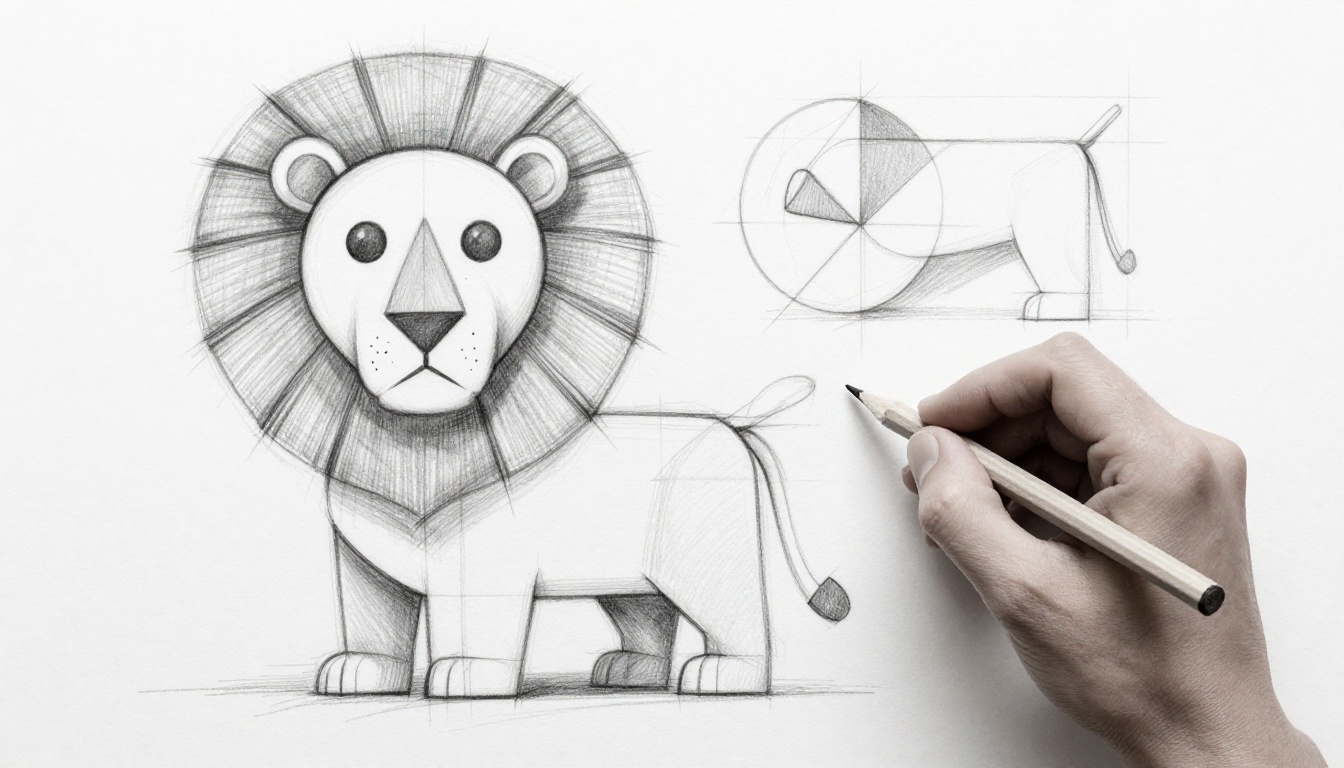
Imagine Disney animators sketching a lion from The Lion King. They start with simple circles for the head and body, rectangles for legs, triangles for ears. No fancy details yet. These pros know basic shapes build everything.
You grab a pencil to draw a portrait or landscape. Lines wobble. Proportions look off. Frustration hits because you skipped the foundation. Basic shapes fix that. They simplify the world around you. Circles capture rounds like heads or eyes. Squares and rectangles handle boxes and buildings. Triangles add points like noses or roofs.
Practice them daily. Your sketches gain proportion and depth fast. You’ll see objects as stacks of forms, not overwhelming details. This post covers the big three shapes, why they boost skills, easy drills, common traps, and fresh 2026 tools. Ready to transform shaky lines into confident drawings?
Meet the Big Three Basic Shapes Every Artist Masters First
Artists boil down complex forms to three starters: circle, square or rectangle, triangle. These 2D bases turn into 3D spheres, cubes, cones with practice. A cat’s body becomes ovals and triangles. A car stacks rectangles. Start here because they train your eye to see structure first.
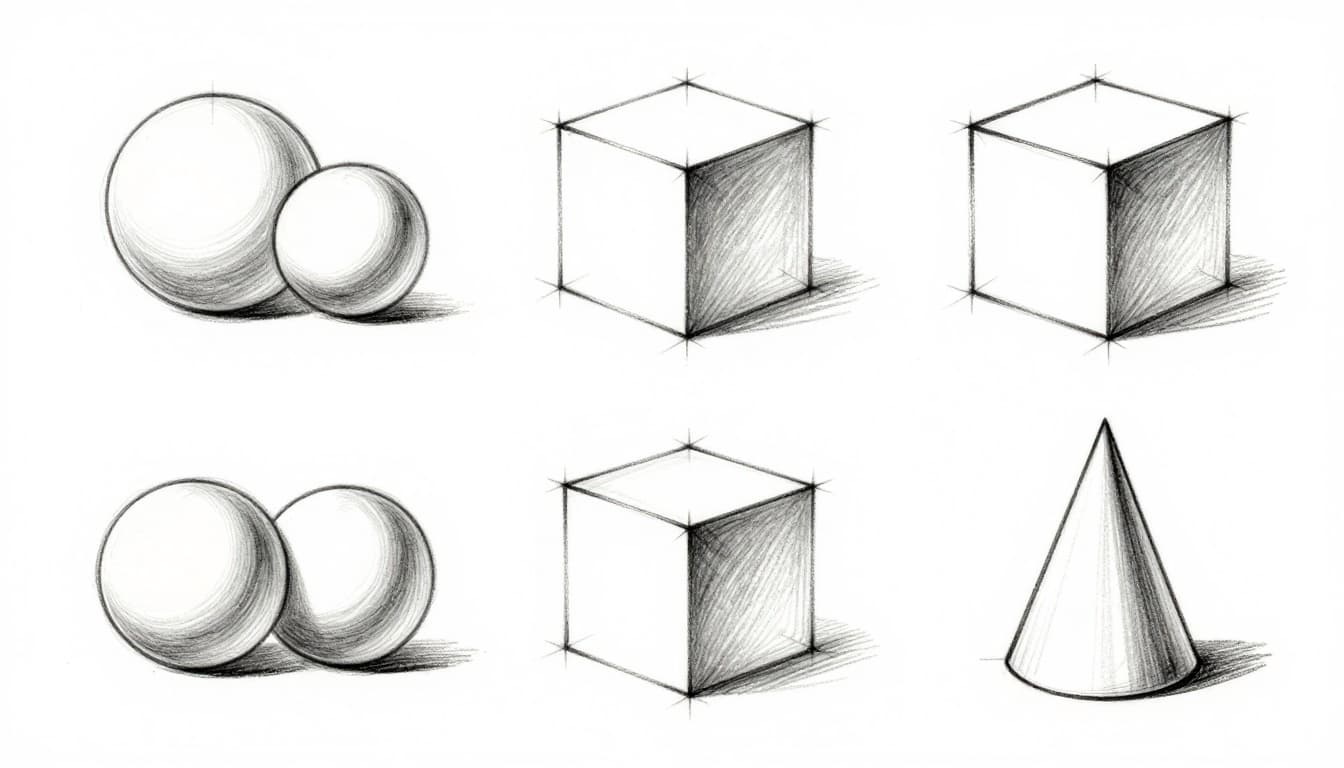
These shapes overlap and combine. For example, stretch a circle into an oval for torsos. Tilt rectangles for dynamic angles. They form the skeleton of any drawing.
The Circle: Your Go-To for Curves and Organic Forms
Circles shine for anything round. Think heads, eyes, muscles, clouds. They suggest softness and flow. Pros like Aaron Blaise teach animators to block characters this way. Check how animators use basic shapes for pro tips.
Draw smooth circles by rotating your paper. Keep your wrist loose. Practice 50 in different sizes each day. Add contour lines inside to fake a sphere’s bulge. Lines curve parallel to the edge, tighter at top and bottom.
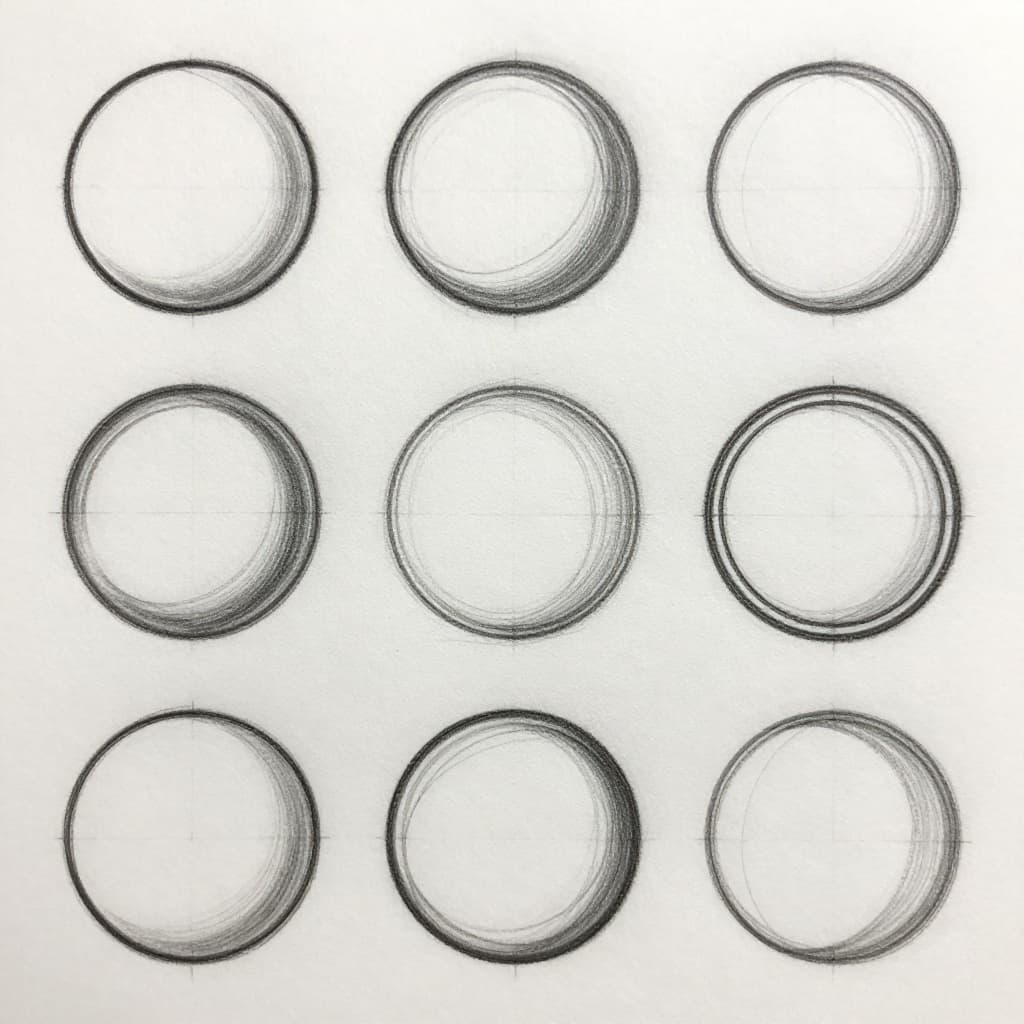
Vary pressure for thick-thin lines. This builds control. Soon, circles feel natural. They pop up everywhere, from fruits to faces.
Squares and Rectangles: Solid Foundations for Straight Edges
Squares and rectangles anchor straight stuff. Buildings, books, cylinders from squished rectangles. They scream stability. Stack them at angles for boxes or furniture.
Practice by drawing one, then tilt the next on top. Connect corners lightly. Erase guides later. This stacks forms like real objects. Rectangles stretch into tables or arms.
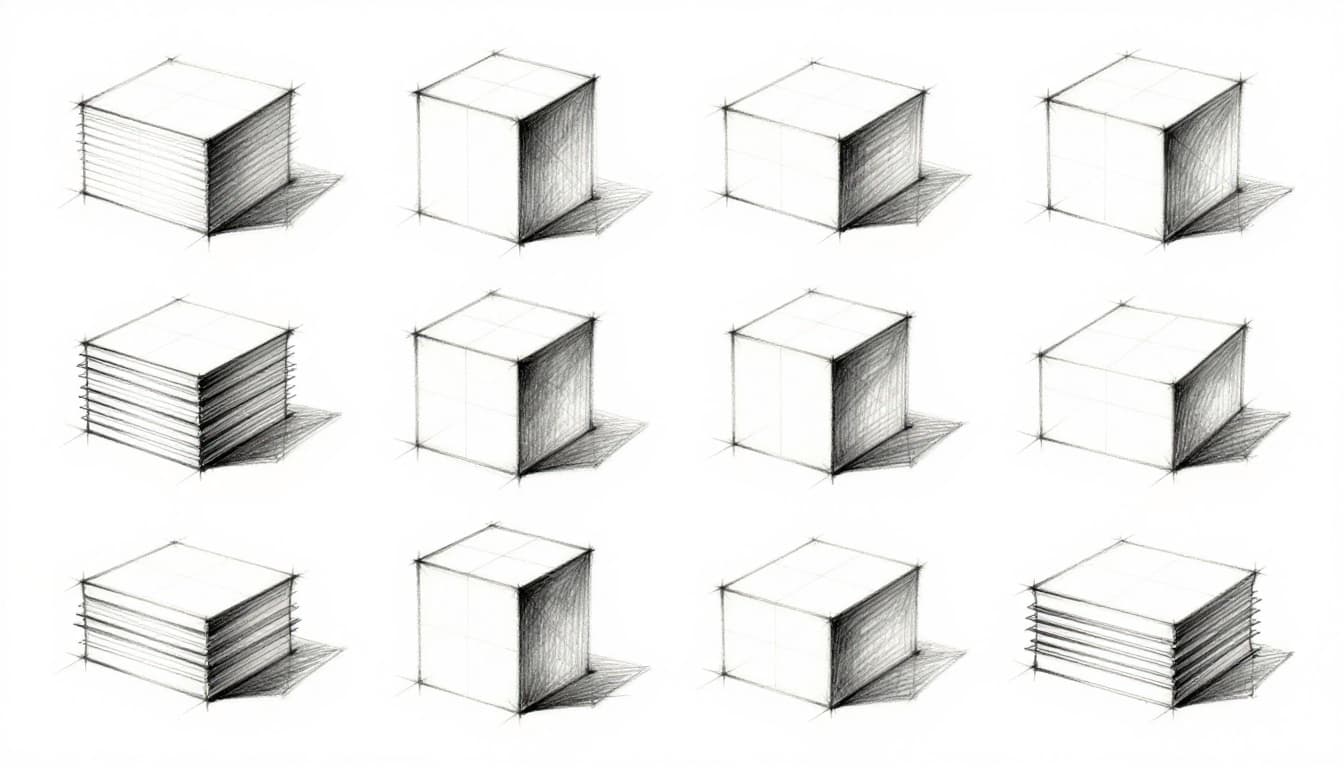
Keep edges crisp. No wiggles. These shapes ground your work. They prevent floppy drawings.
Triangles: Adding Sharp Angles and Dynamic Energy
Triangles bring points and motion. Noses, roofs, arrows, ears. They evolved to cones or pyramids. Vary the base wide or narrow, tip sharp or blunt.
Draw equilateral first, then isosceles. Stack for animal legs or trees. They direct the eye, create tension in poses.
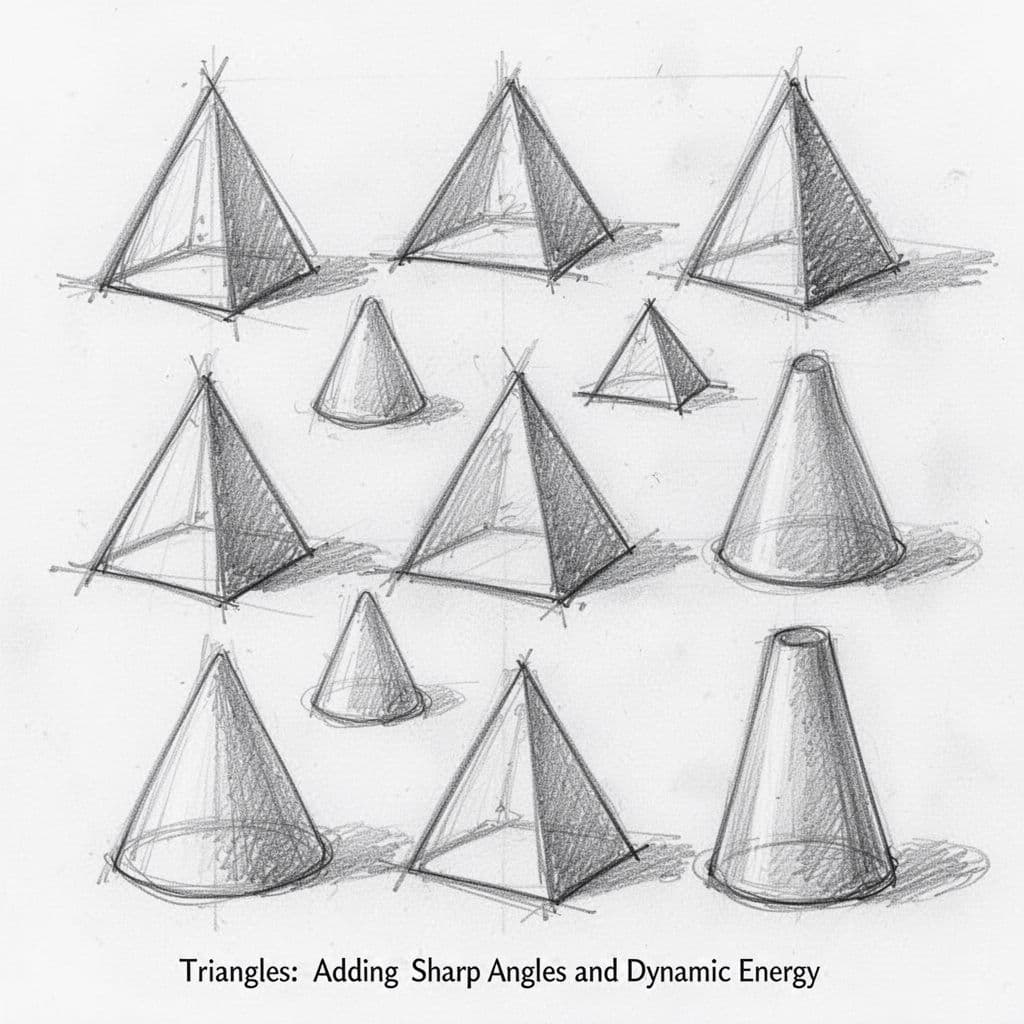
Practice flipping them. This adds energy. Triangles make flat sketches pop.
How Practicing Basic Shapes Supercharges Your Drawing Skills
Break a photo into shapes. Ignore fur or bricks first. Your eye learns structure. Proportions stick because you map big forms.
This builds 3D illusion on flat paper. Memory improves, so you draw from head. Rotate objects mentally. A walking cat simplifies to ovals, rectangles, triangles.
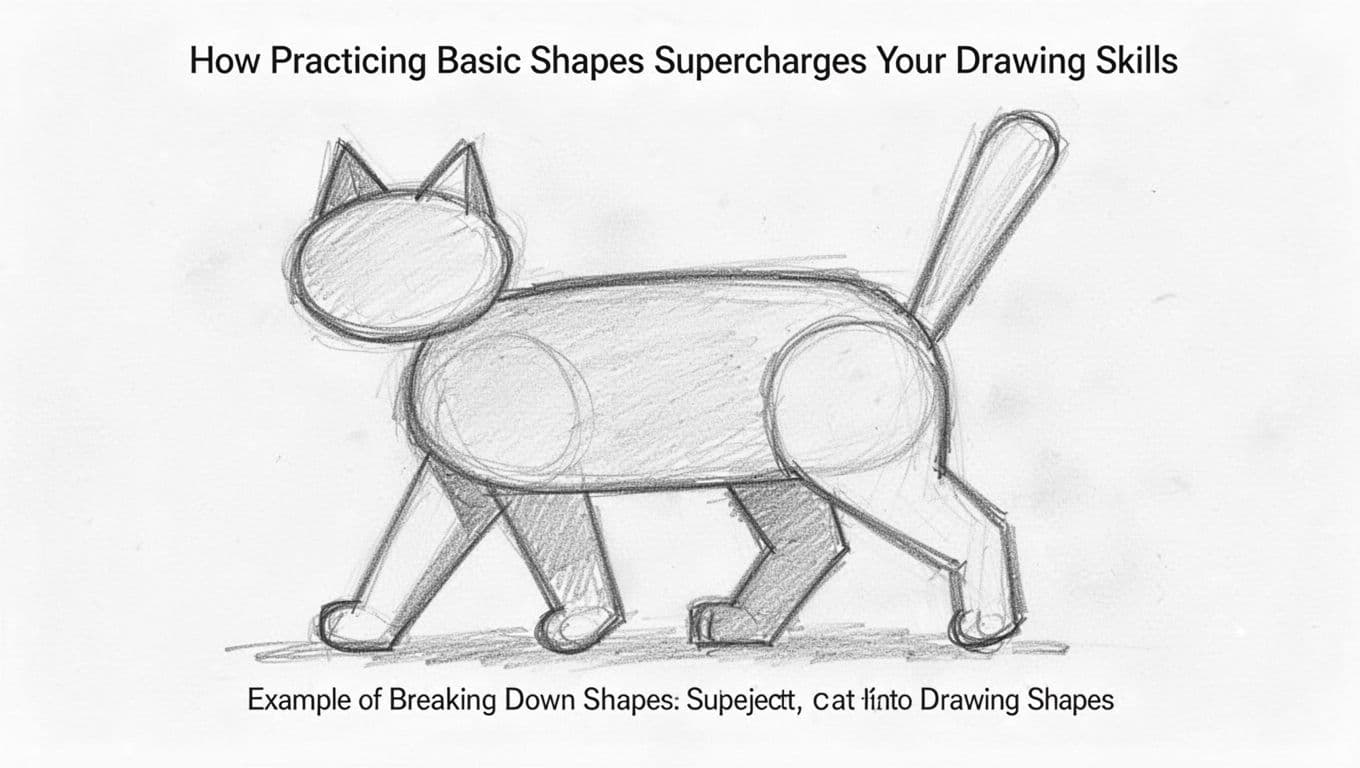
Spend 10-15 minutes daily. Hand-eye syncs fast. Scenes or figures gain solid bases. No more guesswork.
Easy Daily Drills to Practice Basic Shapes Like a Pro
Grab pencil and paper. Time yourself for focus. Start simple, build up. Pencil first teaches control, then try digital.
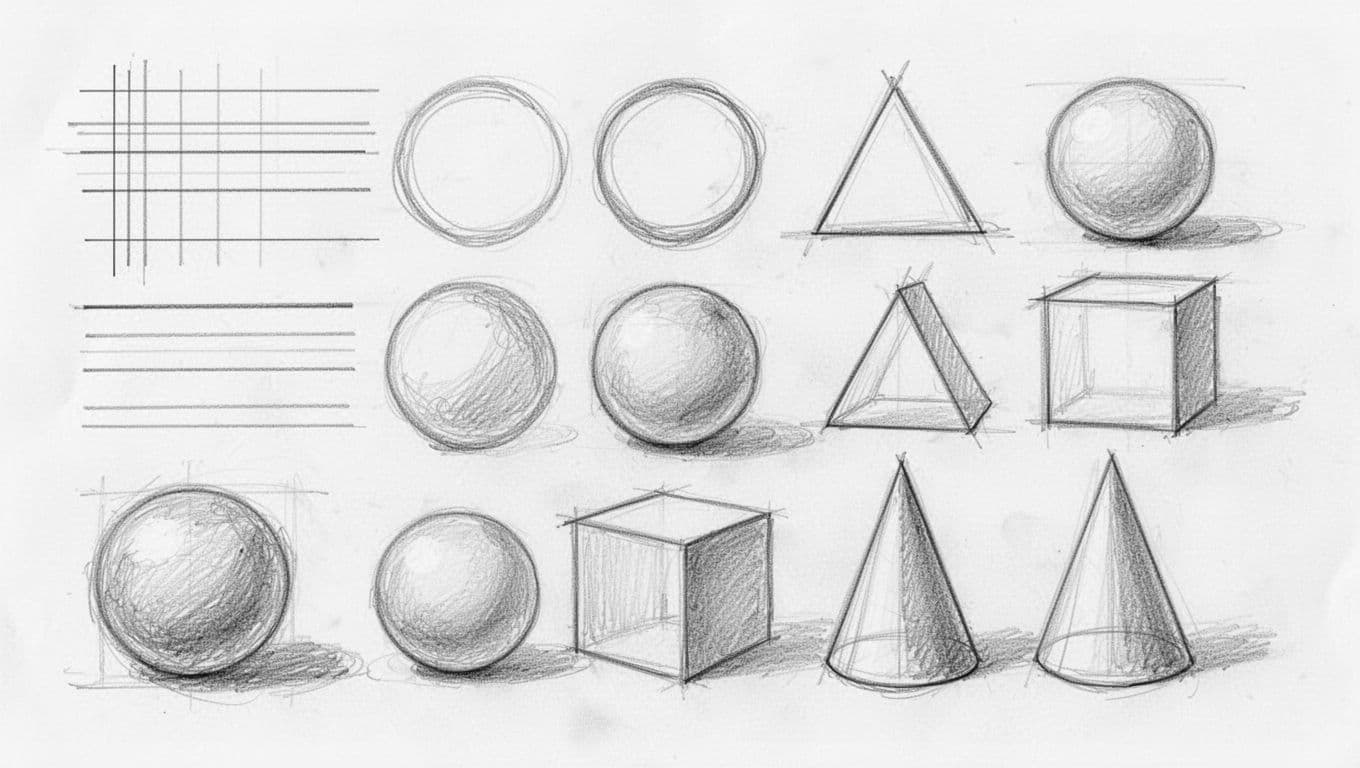
Here is a quick levels table:
| Level | Drill Focus | Time | Goal |
|---|---|---|---|
| Beginner | 2D shapes, line control | 1-2 min | Smooth, even strokes |
| Intermediate | 3D contours on objects | 5 min | Depth illusion |
| Advanced | Full scene breakdowns | 10 min | Speed and proportion |
Do one per session. Progress shows quick.
Quick Warm-Ups for Line Confidence and 2D Shapes
Fill a page with straight lines. Ghost first, commit one stroke. Switch to circles, no scratches. Add squares, triangles. Stack at angles. Vary sizes. This warms muscles.
Level Up to 3D Forms with Real Objects
Grab a can or box. Sketch from arm’s length. Rotate it. Outline 2D shape, add curving contours. Shade lightly for roundness. Repeat with fruits or mugs.
Break Down Real-Life Scenes into Shapes
Pick a photo. Lasso big shapes: circle for head, rectangles for body. Exaggerate first. Add shadows later. Time for 5 minutes. Speed forces big picture view. See core drawing skills for beginners for more breakdowns.
Dodge These Traps to Make Your Shape Practice Count
Don’t add details early. Block shapes loose first. Hesitant lines kill flow, so commit bold after light sketch.
Flat drawings lack contours. Step back often, adjust angles. Ignore negative space, and forms float. Fixes work because they build habits.
Overthink sizes. Measure with your pencil. Darken winners only.
Modern Twists to Boost Your Basic Shape Practice
Apps like Procreate or Infinite Painter offer shape brushes in 2026. Start on paper though. AR tools shine now. ArtEasy or Da Vinci Eye project circles onto paper. Trace to match curves. Check best AR drawing apps in 2026.
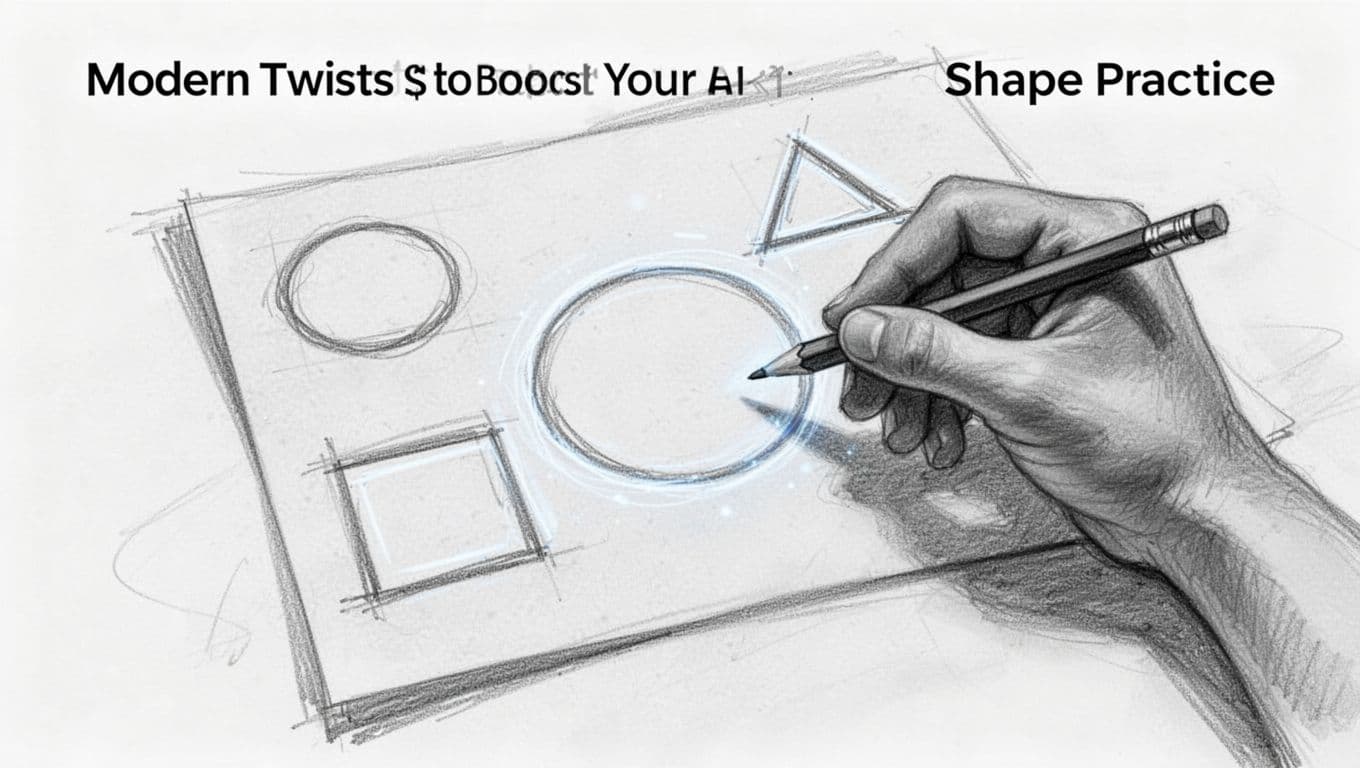
YouTube runs 30-day shape challenges. Search “AR shape tracing Da Vinci Eye.” Organic blobs mix with basics for characters. Blend old school control with tech.
Circles, squares, triangles form your base. Practice 10 minutes daily with one drill. Your sketches gain life fast. That first solid figure waits on simple shapes.
Share your progress below. What shape trips you? Subscribe for more drills. Your confident lines start today.