You hunch over your sketchpad for hours. Your pencil flies across the paper. Then you lean back. The drawing looks weird. Proportions seem off. Lines feel stiff. Shading stays flat.
Most beginners hit these snags. Eyes end up too big. Heads look tiny. Objects twist in space. You wonder why it never matches the reference. Beginner drawing mistakes like these frustrate everyone at first. But simple fixes exist. Artists in 2026 still swear by them.
This guide covers proven steps. You’ll learn to fix proportions with grids and shapes. Master basic perspective for depth. Add shading that pops. Loosen stiff lines. Build a daily routine for real progress. Pick one tip today. Watch your drawings improve fast.
Stop Wonky Proportions from Ruining Your Drawings
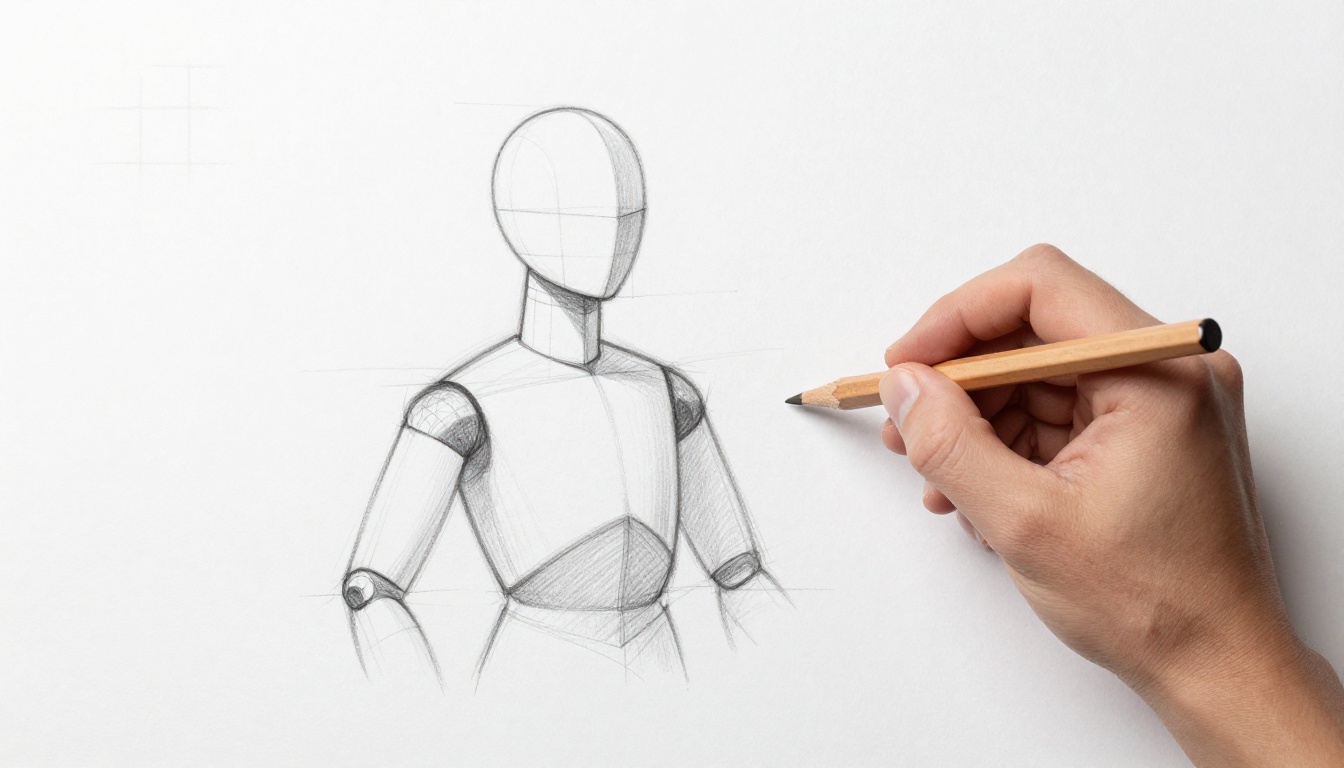
Proportions go wrong because your eye tricks you. Without guides, heads grow huge. Limbs shrink small. The fix starts simple. Use light under-drawings with basic shapes. Think cubes for bodies. Spheres for heads.
First, block in the big form. Draw loose ovals for the torso. Add circles for joints. This sets the size right. Then refine details. Repeat the same object five to ten times. Your eye trains fast.
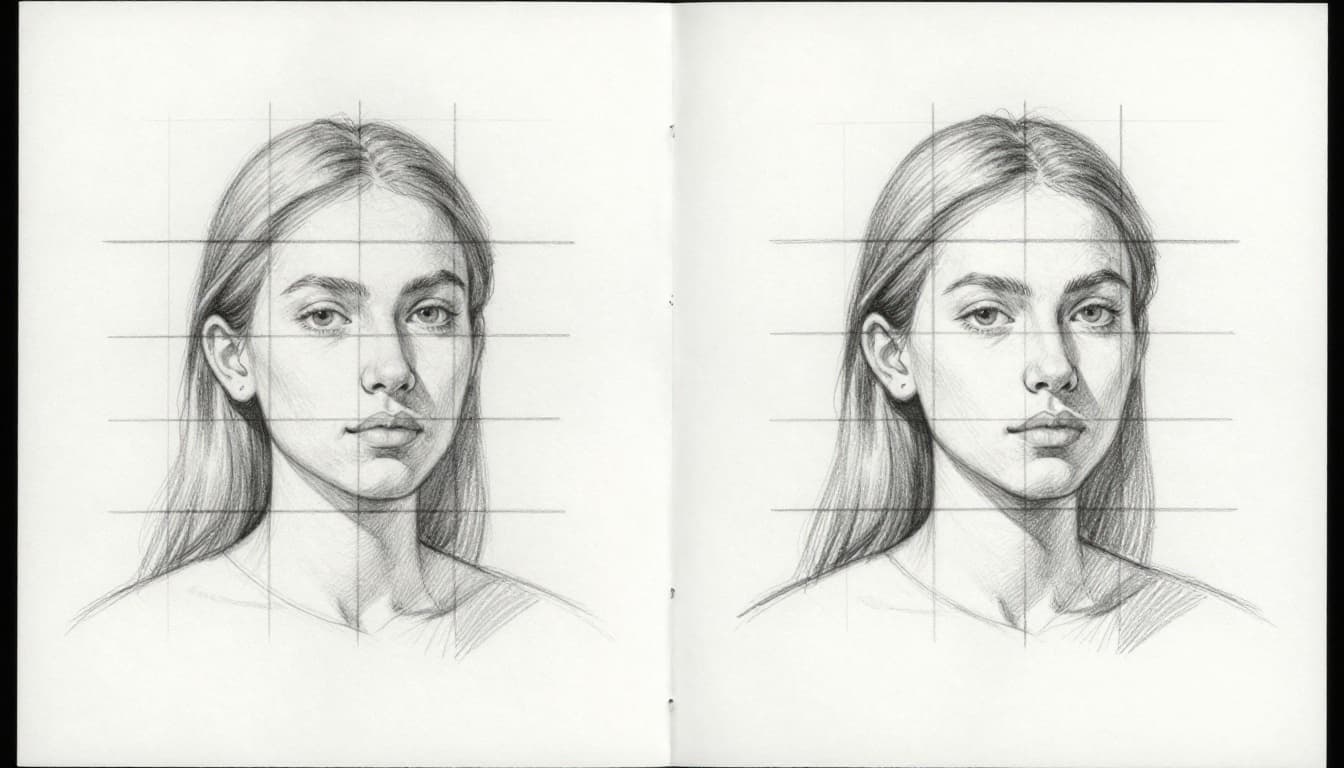
Grids help too. They break photos into chunks. Match each square. Proportions snap into place. For more on this, check Elise Peterson’s grid drawing guide.
Quick Grid Trick for Accurate Sizes
Overlay a grid on your photo. Use one-inch squares. Draw the same on paper. Copy shapes square by square. Start with easy objects like apples.
This works because it forces focus on small parts. No guessing whole sizes. Practice once a day. Soon, you skip grids but keep the accuracy. Have you tried grids yet?
Build Shapes First Before Details
Sketch primitives loose. A sphere for the head. A box for the ribcage. Light lines only. Refine after the form fits.
Details come last. Eyes and fingers kill proportions if added early. Build from big to small. Your drawings gain balance quick.
Make Your Drawings Pop with Basic Perspective
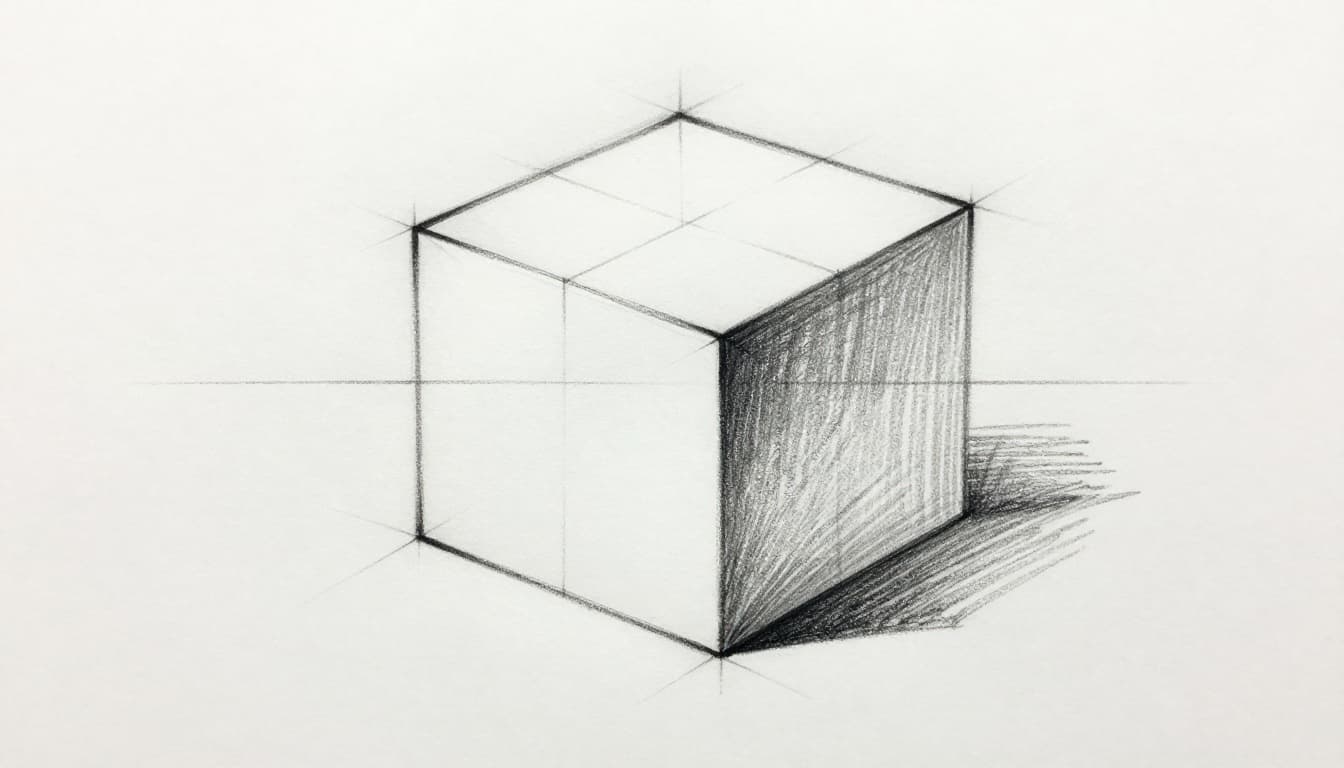
Perspective fails when lines don’t converge. Boxes look flat. Rooms twist funny. Start with one-point setups. Pick a vanishing point on the horizon.
Draw guides first. Light lines from the point. Edges follow them. Practice simple boxes. Double your reference size for room to adjust.
For a box, mark horizon. Dot the vanishing point. Lines recede to it. Add sides parallel. Shade faces. Depth appears. See this beginner perspective guide for drills.
Draw Guides to Nail Vanishing Points
Set horizon at eye level. Place one vanishing point. Sketch receding lines faint. Build forms along them. Erase guides later.
This keeps objects grounded. No floating mess. Practice streets or halls next.
Practice Turning Simple Shapes in Space
Draw cubes from angles. Spheres too. No tracing. Rotate mentally. Lines converge always.
After ten tries, forms feel solid. Perspective becomes habit.
Bring Drawings to Life by Fixing Flat Shading
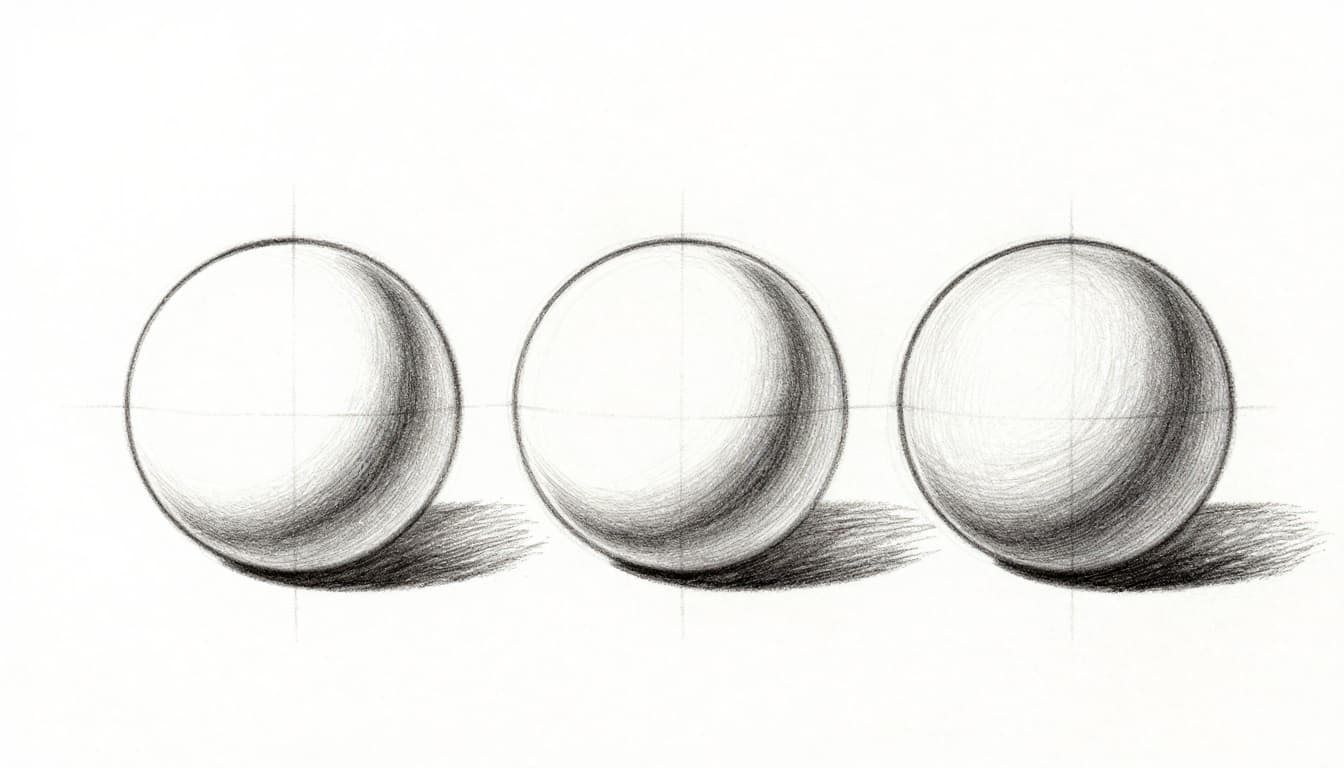
Shading looks flat from timid marks. Outlines alone kill form. Squint at your reference. Big light and dark shapes emerge.
Use black-and-white photos. High contrast helps. Start light. Layer darks bold. Blend edges soft. Full value range matters.
Layer hatching clean. Lines close for darks. Space them for lights. Light pressure builds tones even. Current artist tips stress this.
Squint and Simplify Light Shapes
Squint hard. Ignore tiny details. Block light side. Shadow side next. Transition blends them.
This reveals form fast. No flat blobs.
Layer Darks Boldly Over Light Base
Outline faint. Mid-tones hatch light. Darks pile on. Lose outlines by blending.
Spheres round out. Forms lift off paper. Practice one object daily.
Loosen Up Stiff Lines for Smoother Flow
Stiff lines come from tight grips. Fear of errors tenses your hand. Draw loose and faint first. Multiple tries. Pick the best.
Vary pressure. Light for roughs. Heavy for finals. Time yourself. Ten minutes down to one. Flow improves.
Copy shapes from refs smooth. Match curves freehand. For exercises, try Yvonne Morell’s line drills.
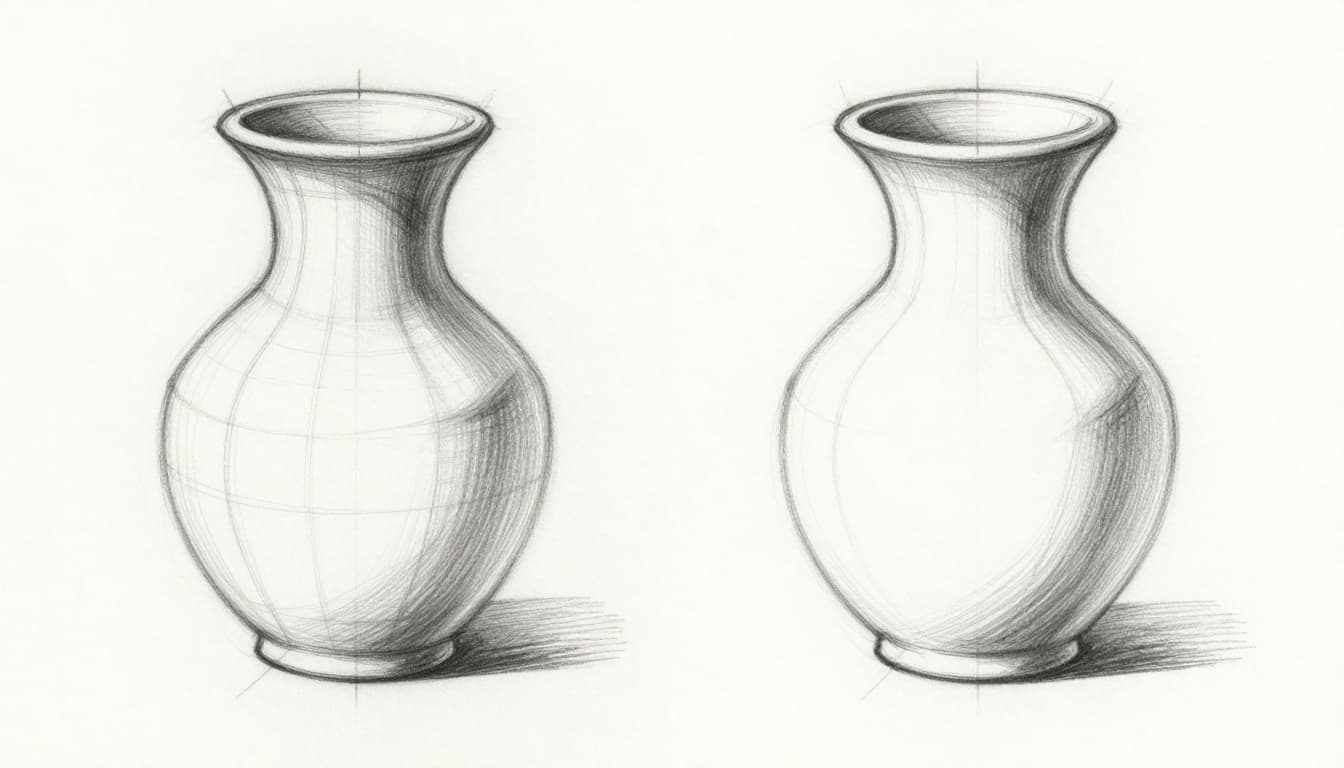
Start Loose with Faint Sketch Lines
Layer light passes. Ghosts overlap. Refine the winner bold.
No commitment early. Freedom breeds better lines.
Vary Pressure and Speed for Natural Lines
Speed drills relax you. Light touch glides. Heavy commits clean.
Practice curves daily. Stiffness fades.
Build a Simple Daily Practice Routine That Works
No routine means stalled skills. Draw every day. Short sessions build mileage. Focus one fix per time. Grids today. Shading tomorrow.
Use cheap paper. No pressure. Quick wins motivate. Spend seventy percent on basics. Under-drawings first.
Negative space trains eyes. Outline around objects. Shapes pop clear.
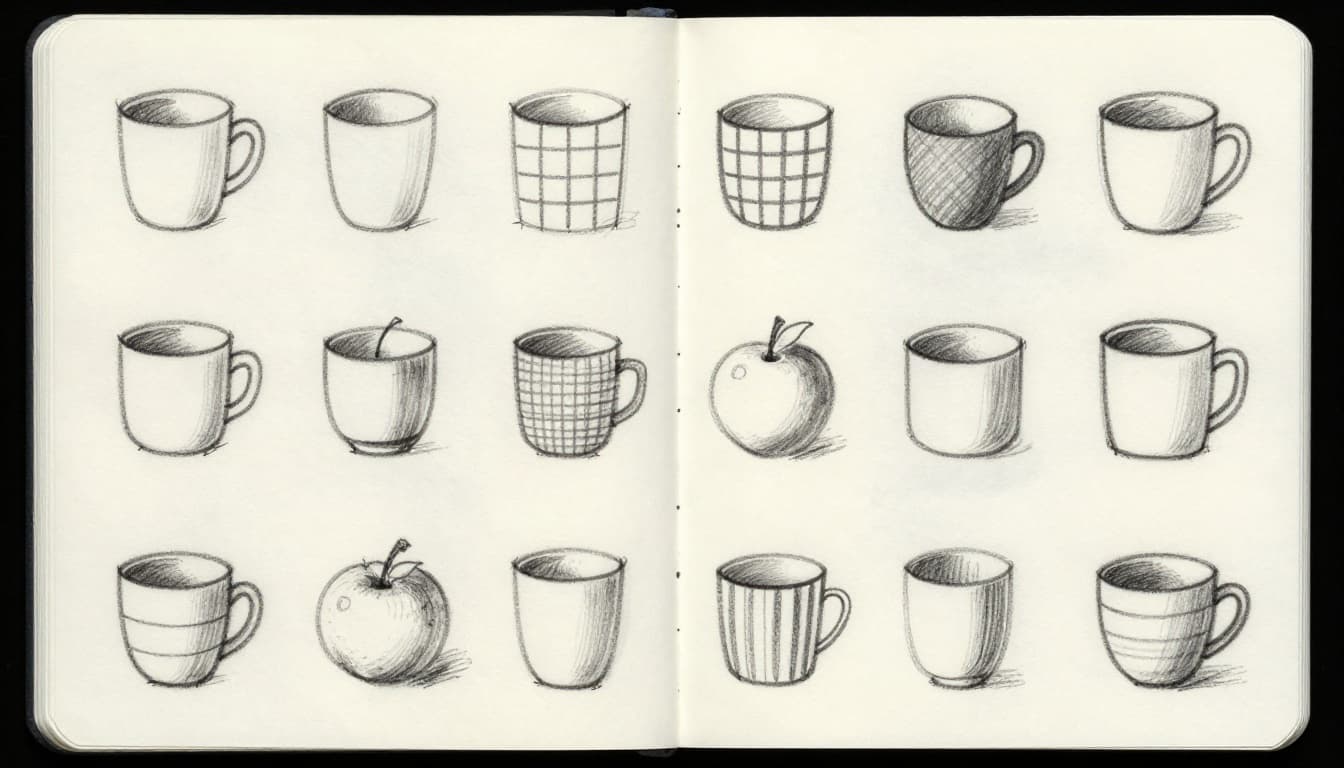
Daily Quick Sketches for Eye Training
Repeat refs fast. Negative space fills gaps. Eye sharpens quick.
Focus Time on Foundations, Not Fancy Details
Basics take most time. Details follow easy. Progress snowballs.
Grids fix proportions. Guides add perspective. Values build form. Loose lines flow natural. Daily practice cements it all.
Pick one beginner drawing fix now. Grab pencil. Sketch ten minutes. Share your before and after in comments. What trips you up most?
Consistency wins over talent. Your drawings improve soon. Keep at it.