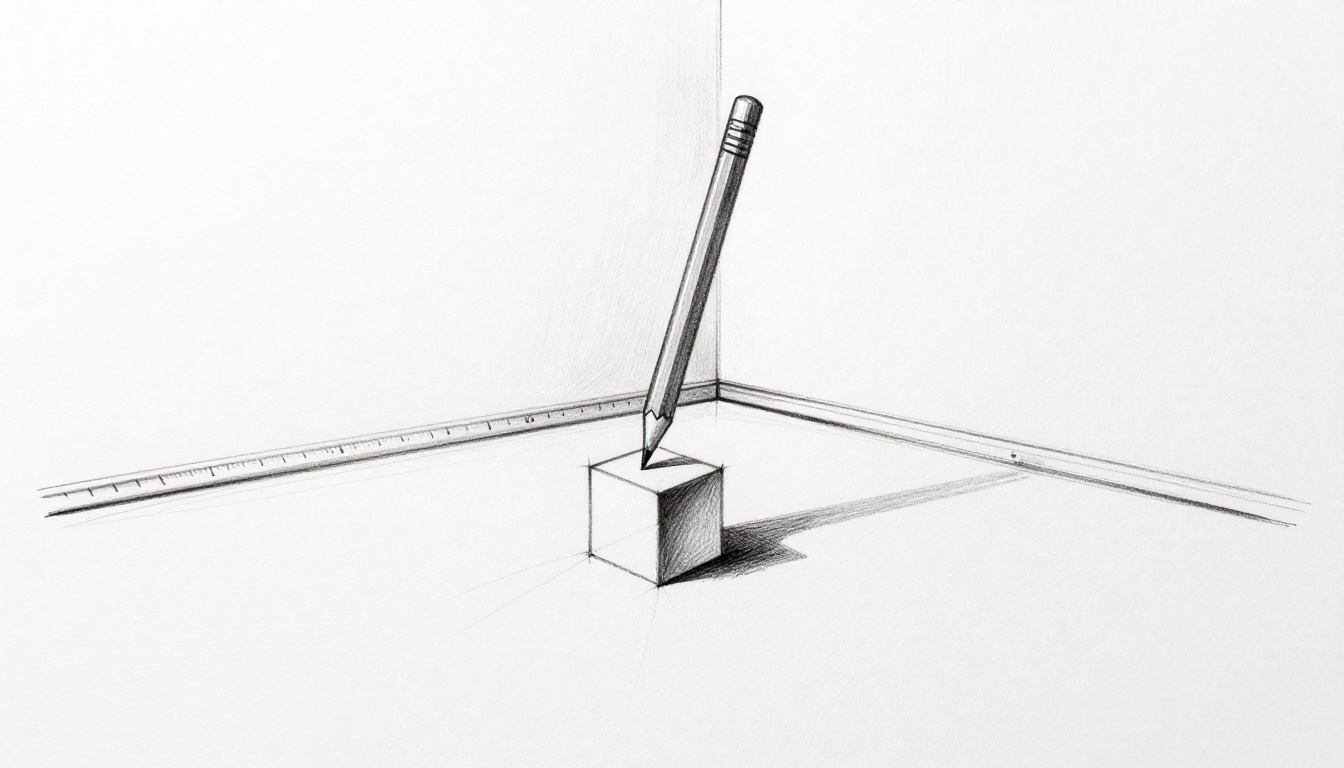
Picture this. You sketch a simple room, but the walls twist like a funhouse mirror. Lines refuse to meet. Everything feels off.
Perspective turns flat paper into a 3D world. It makes objects shrink in the distance and parallel lines converge. Beginners often mess up vanishing points, horizon lines, and scale. These lead to wonky buildings or flat scenes.
This post covers those common perspective mistakes beginners make in drawing. You’ll get clear examples and fixes. Simple steps with rulers and practice make your art realistic fast. Let’s fix lines first.
Lines That Wander Off: Nailing Vanishing Points and Basic Directions
Lines drift because beginners skip vanishing points. That spot on the horizon pulls parallel lines together, like railroad tracks hugging in the distance. Without it, buildings look twisted.
Vertical lines stay straight and parallel in basic one-point perspective. They don’t lean. Horizon lines sit at eye level, not random sky or ground. Doors and windows slope toward the vanishing point. Upright shapes stay square only if facing you straight on.
Practice starts with boxes. Tape a dot on your paper for the vanishing point. Draw light construction lines first. Check with a ruler. Darken what works.
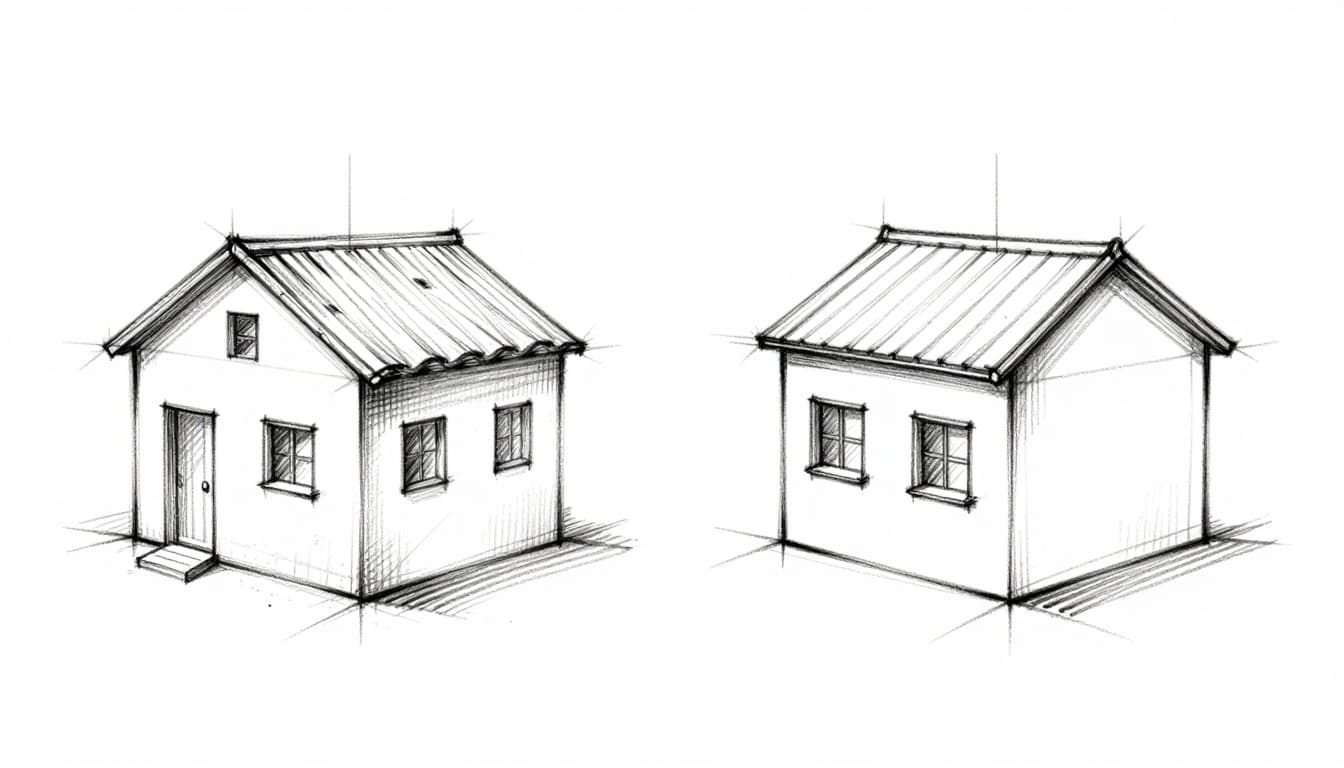
Vanishing Points Ignored: Why Buildings Look Twisted
Receding lines miss the point. A street or box curves wrong. Roofs and sides fail to meet.
Pick one vanishing point. Draw light lines to it with a ruler. Darken the good ones. Flip your drawing upside down to spot errors. For more on this, check 9 common mistakes in perspective and fixes.
Verticals Leaning Wrong: Keep Them Straight Up
Tall buildings tilt like trapezoids. Sides lean in or out.
Use a plumb line or paper edge for true verticals. Skip tilts unless you use advanced multi-point views. Draw grids to practice. Draw through forms with light lines, as recent tips suggest.
Horizon Line Mix-Up: Place It at Your Eye Level
Low horizons dwarf people. High ones make you feel giant. Ground swallows everything.
Imagine your viewpoint. Mark the line across the page at eye height. Place vanishing points there. This sets the scale right.
Windows and Doors at Funny Angles
Square windows on angled walls turn rectangle-shaped. Edges ignore the point.
Build them as part of a larger box. Check convergence. All lines head to the vanishing point.
Size and Space Slip-Ups: Making Distance Feel Real
Far objects stay huge. Items space out evenly, like a flat picket fence. Depth vanishes.
Things shrink and bunch up as they recede. Telephone poles on a road start big and wide. They end tiny and tight at the horizon.
Measure units from your view. Divide intervals toward the vanishing point. Lighter tones and blur add depth to distant items. Grid-practice simple streets.
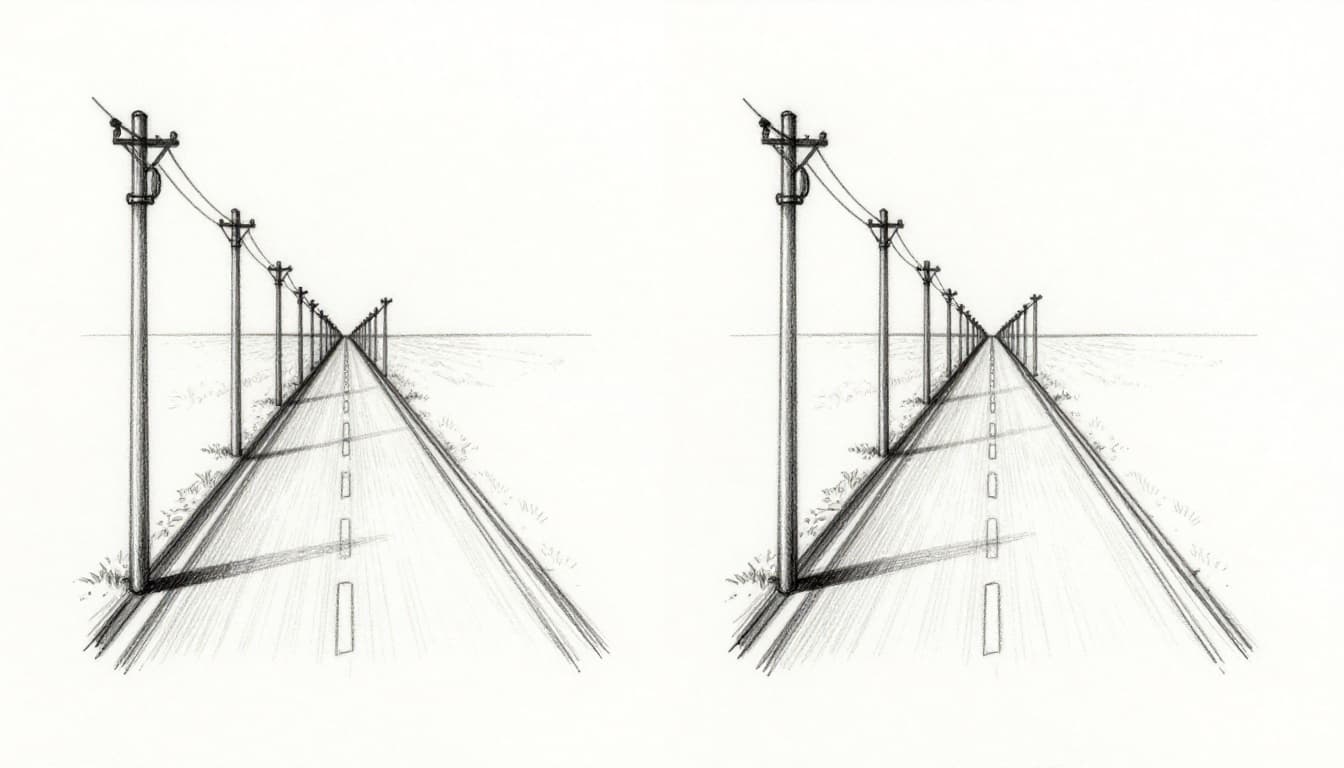
Distant Objects Stay Too Big
Trees match heights front to back. No taper.
Scale down. Widest up front, narrow to the point. Thumb-measure at arm’s length. Start simple to avoid tunnel vision.
Repeating Items Spaced All Wrong
Fence posts grow bigger. Spacing ignores depth.
Draw the first post. Measure to the next. Halve for the rest or use perspective math. Ruler helps every time. See a beginner guide to perspective drawing for drills.
Curvy and Extreme Challenges: Circles, Ovals, and Wide Views
Circles squash wrong. Wide scenes distort like fish-eye lenses.
Circles turn ellipses. They touch midpoints of an enclosing square. No perfect circles or lopsided ovals.
Box the circle first. Fit the oval perfect. Practice cylinders. For broad views, add a second vanishing point. Trace real photos lightly to train your eye.
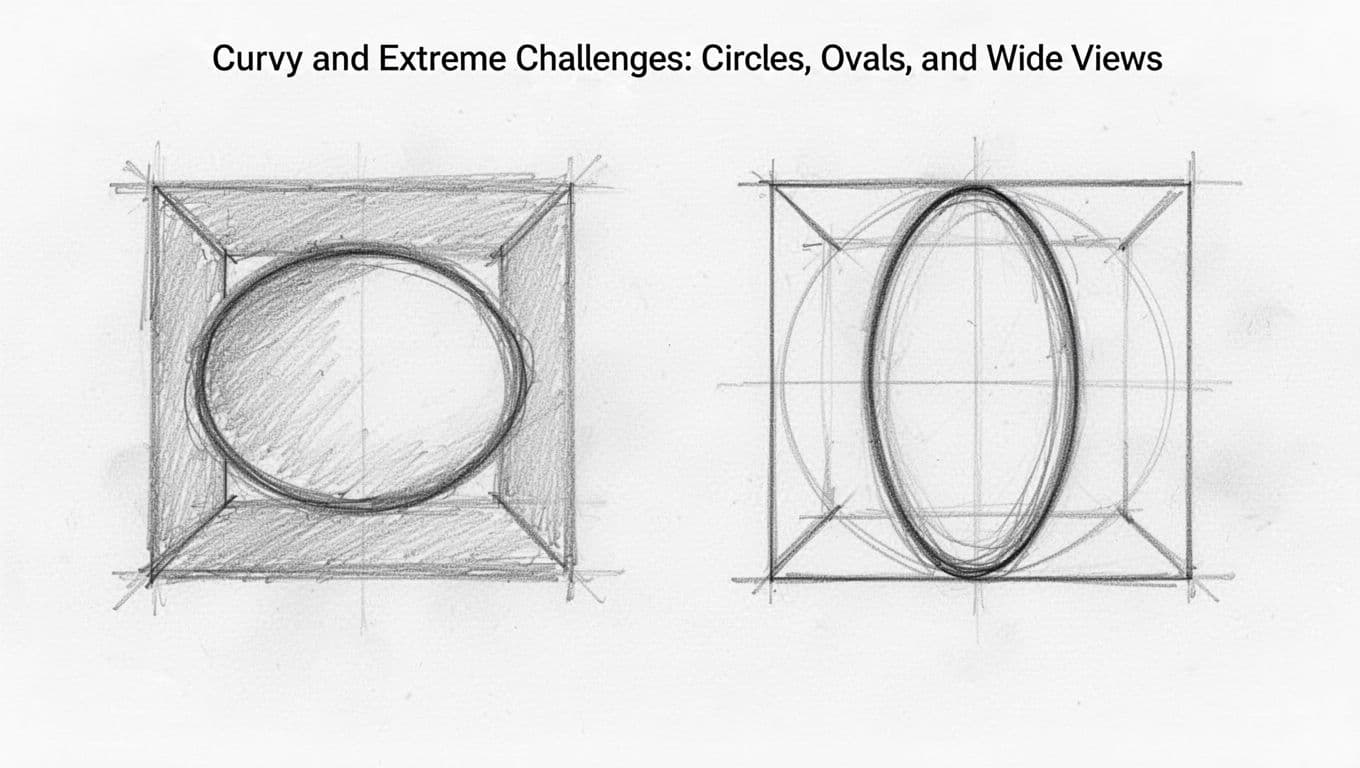
Circles Drawn Wrong as Ovals
Lopsided shapes miss the square’s centers.
Lightly draw the square. Fit ellipse inside. Erase lines after. Simple wheels or pipes improve fast.
Pushing One-Point Too Far for Wide Scenes
Super-wide rooms warp angles.
Add a second point on the horizon. Sides look natural. Start with two-point boxes.
Fixes beat frustration. Common mistakes like wandering lines, bad scales, and wonky ovals vanish with thumbnails and rulers. Go freehand later.
Do daily 10-minute box drills. Try one-point then two-point. Grab your sketchbook. Draw a street scene now. Share your progress in the comments.
Fix these common perspective mistakes beginners make, and your drawings pull viewers into realistic worlds. Observe real life. It’s the best teacher.