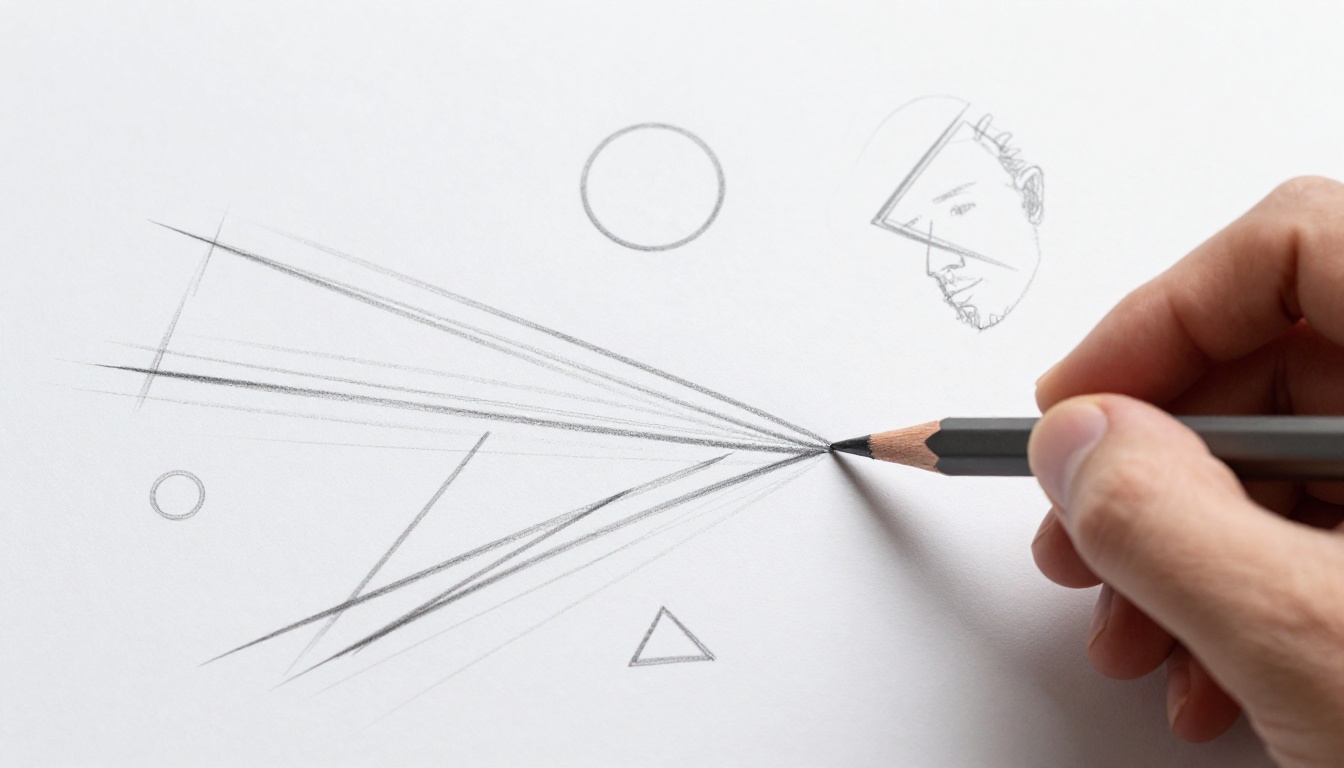
You grab a pencil to sketch your first portrait. The eyes look wonky. The nose skews off. Frustration hits, and you quit after one try. Sound familiar? Many beginners face this.
Experts in 2026 agree. Short daily sessions of basic exercises build hand-eye coordination and confidence in weeks. You see real gains with just pencil and paper.
Start with this proven sequence: straight lines, curves and zigzags, basic shapes, hatching for shade, then quick gestures. These steps lead to smoother, bolder drawings fast. Let’s jump in.
Build Rock-Solid Control by Mastering Straight Lines First
Straight lines form the base of every drawing. Beginners shake here most. Fix that early, and everything else steadies.
Grab plain paper and a pencil. Or try a pen, as 2026 pros recommend. No eraser means better control. Draw slow horizontal lines across the page. Aim for one smooth stroke. Fill a row.
Next, go vertical. Then diagonal at 45 degrees. Speed up a bit. Vary lengths and spacing. Use faint dots as guides if needed. Shake your hand loose if it tenses.
This trains muscle memory. Shaky lines vanish in real sketches. You gain steady control quick. Trends show beginners improve fastest here before complex forms.
For more on long straight lines, check this beginner exercise.
Fun Variations to Make Lines Your Superpower
Connect distant dots with lines. Practice light pressure next to heavy. Fill the page evenly, no gaps.
These prep you for buildings or figures. Progress shows in days. You draw fences or limbs without wobbles. Keep at it. Your hand feels stronger already.
Unlock Fluid Motion with Curves and Zigzag Practice
Lines alone feel stiff. Curves add life. They mimic hair, cloth folds, or animal backs.
Start with short wavy lines. Stretch them longer across the page. Repeat for smoothness. Then zigzags. Vary angles and sizes. Go slow at first.
Use your whole arm. This breaks rigid strokes. Pros say 5-10 minutes daily yields flow fast. Curves appear in most subjects, so master them now.
Daily warm-ups like these boost skills quickest, per recent advice.
Mix It Up for Better Hand-Eye Sync
Overlap waves lightly. Scribble random zigzags, no rulers. Focus on rhythm, not perfection.
Perfectionism slows you. Flow matters more. This ties to overall growth. Your strokes loosen. Drawings look natural sooner.
Draw Circles and Shapes to Tackle Realistic Forms
Shapes build on lines and curves. They form faces, fruits, or boxes. Control grows here.
Fill a page with circles of varied sizes. No overlaps. Then ovals tilted different ways. Add squares, triangles.
Try 3D versions next. Shade a sphere lightly. Outline a cube. Repetition boosts precision.
This foundation helps perspective and big objects. Experts note better control for still lifes soon. Visible wins motivate you.
See simple shape ideas for starters.
From Flat to 3D: Level Up Your Shapes
Shade one side of a cube darker. Curve lines for sphere highlights. Keep it light.
This preps real subjects. No frustration needed. Practice turns flat sketches 3D fast.
Shade Like a Pro Early with Hatching Lines
Flat drawings lack punch. Hatching adds tone quick. Do it after basics.
Draw parallel diagonal lines. Space them close for dark, wide for light. Layer cross-hatch at new angles.
Builds hand strength. Introduces depth. 2026 tips stress this for polish. Avoids boring art.
Relax your grip. Vary angles. Right-handers slant one way; lefties, the other.
Learn easy hatching steps.
Layering Tricks for Instant Depth
Cross-hatch inside a circle. Darken one half. Fill a square gradient-style.
Connects to portraits later. Short sessions give pro shading. Depth pops right away.
Add Speed and Life with Quick Gesture Sketches
Basics down? Add energy. Gesture captures motion, not details.
Set a 2-minute timer. Sketch a photo of a person or dog. Focus on action lines: C-curves, S-curves, straights.
Or scribble loose shapes on purpose. Loosens stiffness.
Do this last. It fights tight habits. Pros see natural flow in weeks with 10-20 daily.
Try quick pose exercises.
Daily Habits That Turn Beginners into Confident Artists Fast
Consistency wins. Do 10-15 minutes daily. One pencil, cheap paper.
Pick one exercise per session. Rotate through the sequence. Track pages weekly. Notice straighter lines, smoother curves.
Combat cramps: shake hands, stretch wrists. Short bursts beat long slogs, say 2026 experts.
One beginner filled notebooks in two weeks. Stiff sketches turned lively. You can too. Transformation starts small.
Stick to Fundamentals and Watch Skills Soar
Master lines first. Add curves, shapes, hatching, gestures. These build control, flow, and depth fast.
Fundamentals speed growth most. Skip them, and frustration lingers.
Grab your pencil today. Try lines for 10 minutes. Share your first page in comments. Commit to a week. You’ll draw better already.
What held you back before? Start right now. Anyone improves quick with this path.