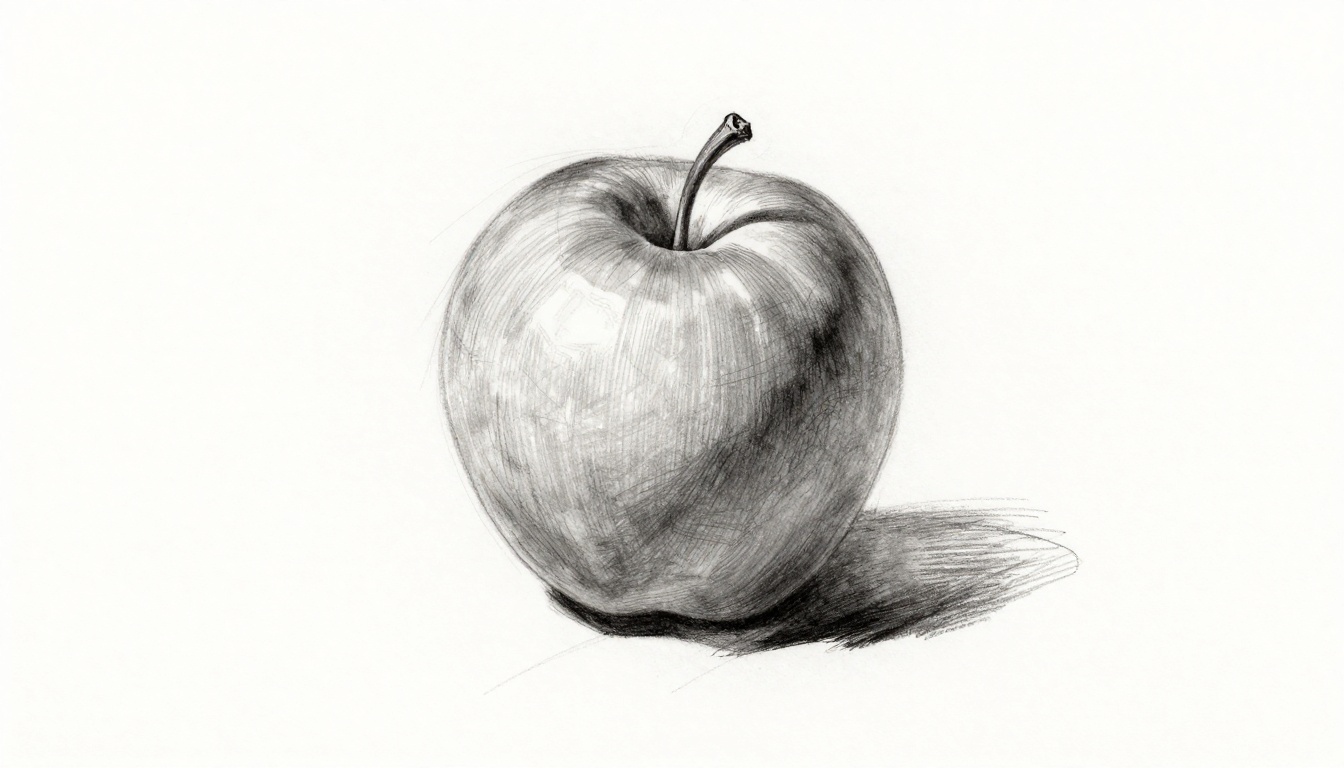
Ever wonder why a flat pencil sketch suddenly looks round and real? You add light and shadow. Light hits bright spots directly from a source. Shadow blocks that light in dark areas. Together, they build depth.
Many beginners skip this step. Their drawings stay two-dimensional. This guide fixes that. You’ll learn the basics, key parts, pro techniques, artist examples, simple science, drawing tips, common mistakes, and digital tools. By the end, your art will pop with life-like form.
Spotting Light and Shadow: The Key Building Blocks
Light and shadow form the base of realistic art. They turn simple shapes into objects with volume. Think of sunlight on an apple. The lit side glows. The dark side recedes.
Artists break light into parts. Shadows have types too. Spot these, and your drawings gain dimension fast.
Highlights and Halftones: Where Brightness Lives
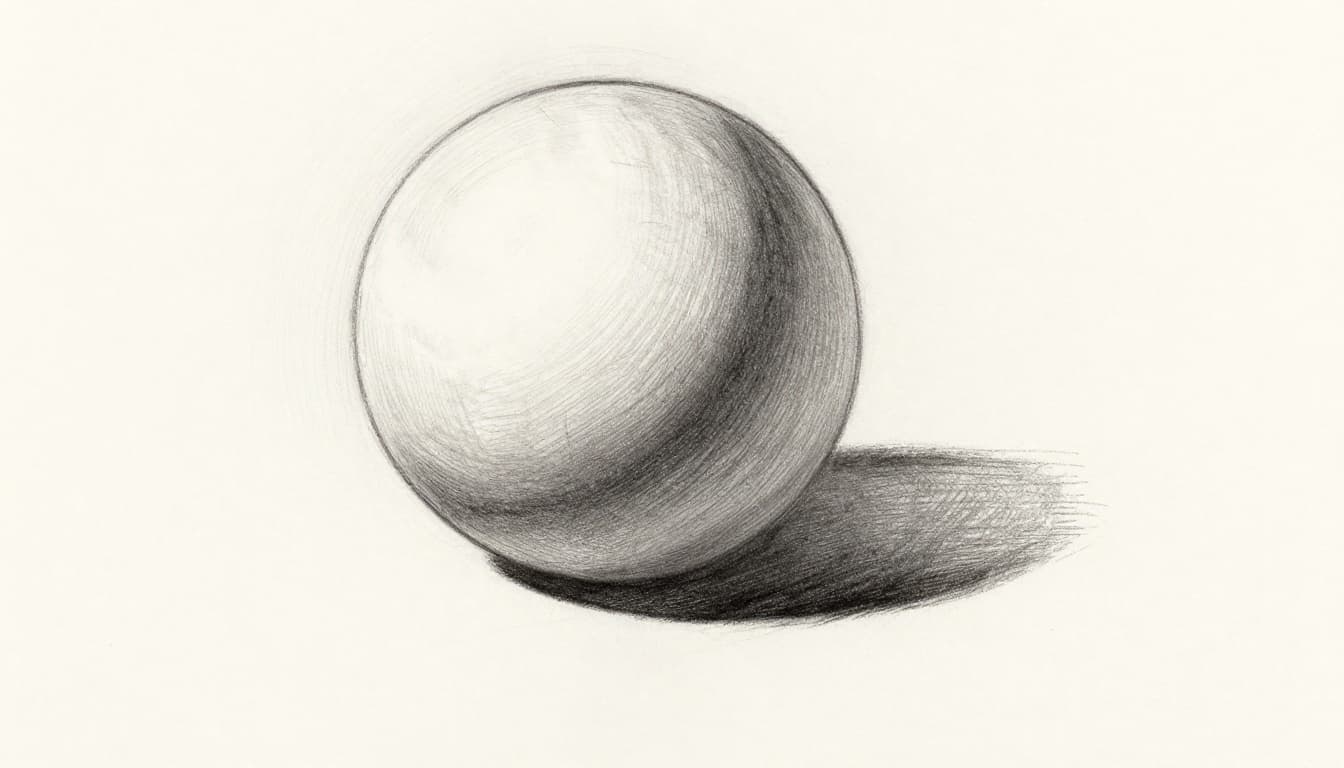
Highlights catch the brightest light. They sit at the peak, like a shiny spot on a wet apple. Crisp edges make them stand out.
Halftones fill the space between. They fade from bright to dim. Soft blends create smooth curves. On a sphere, halftones wrap the top and side gently. Practice this fade. It sells the round form.
Shadows Explained: Core, Cast, and Hidden Darkness
Core shadow marks the edge. Light stops there. It wraps the form sharply.
Cast shadows fall away. They project onto surfaces. The core stays dark. Edges soften at the end. These ground objects in space.
Occlusion hides the deepest spots. Crevices or bases stay black. Reflected light bounces in sometimes. It lightens shadows a bit. For more on these basics, check this beginner’s guide to light and shadow.
How Light and Shadow Team Up for Lifelike Depth
Contrast drives the magic. Bright light sides push forward. Dark shadow sides pull back. This fools your eye on flat paper.
One main light source rules. It sets direction. Soft shadows appear farther off. Curves on a ball show form best this way.
Volume emerges naturally. Space feels real. Objects stack with logic. Your viewer believes the illusion.
Chiaroscuro and Tenebrism: Techniques That Add Drama
Artists amp up contrast on purpose. Chiaroscuro balances light and dark. It builds three-dimensional form without outlines. One light source focuses the scene.
Tenebrism cranks it higher. Deep blacks swallow most space. Sudden light beams cut through. Mood intensifies. Emotion grabs you.
Both draw the eye. They create focus and tension.
Chiaroscuro: Crafting Form with Bold Contrasts
This Renaissance trick started soft. It grew bolder over time. Strong lights model faces and folds. Drama rises. Realism sticks because shadows wrap naturally. See chiaroscuro techniques explained for painting tips.
Tenebrism: Turning Darkness into Spotlight Magic
Think extreme chiaroscuro. Light pierces gloom like a knife. It spotlights key figures. Tension builds fast. Perfect for stories with edge.
Master Artists Who Lit Up the Art World
Greats mastered this skill. Their works teach volumes. Light pulls you in. Shadows hide secrets.
Leonardo da Vinci softened edges. Rembrandt warmed his glows. Caravaggio slashed with beams. Study them. Copy their logic.
Leonardo da Vinci’s Subtle and Mysterious Light
In Mona Lisa, her face glows gently. Shadows blend smooth under eyes and chin. Mystery lingers because transitions stay soft. Form emerges without harsh lines.
Rembrandt’s Warm Drama in Portraits
The Night Watch bursts from dark. Figures emerge in golden light. Shadows pool thick yet reveal details. Warmth invites you closer.
Caravaggio’s Intense Beam of Emotion
The Calling of St. Matthew uses one ray. It hits the table. Shadows cloak the rest. Drama explodes. Every choice pulls emotion.
For tenebrism examples from these masters, explore this Baroque light comparison.
The Straightforward Science of Light and Shadow
Light travels straight. It weakens with distance. Side angles stretch shadows long. Overhead light shortens them.
Small sources cast sharp edges. Big ones blur them soft. Sunlight warms. Bulbs cool blue.
Umbra blocks full. Penumbra fades at edges. Bounced light fills shadows lightly. Know this. Your art matches real life.
Easy Tips to Draw Light and Shadow Like a Beginner Pro
Start simple. Pick tools you like. Pencil works great. Build step by step.
You’ll gain control fast. Practice pays off.
Pick Your Light Source and Map the Basics
Choose one source. Note its angle and power. Sketch the form first. Mark light and shadow sides. Draw the terminator line. Add cast shadows next.
Practice on Spheres and Simple Forms
Spheres teach curves best. Shadow wraps evenly. Try cubes too. Faces stay flat. Edges sharpen.
Layer Tones and Blend for Realism
Squint your eyes. See big light and dark masses. Layer light to dark. Blend halftones soft. Keep highlights crisp. Gradually build.
Pitfalls to Dodge for Better Results Every Time
Shadows float without casts. Check direction matches light.
Flat art lacks transitions. Add halftones always.
Too many highlights scatter focus. Pick one strong spot.
All hard edges kill softness. Vary them.
Skip reflections. Shadows stay dead black. Bounce light saves them. Quick squint test fixes most issues.
Light and Shadow Thrive in 2026 Digital Art
Digital tools speed things up. Photoshop layers let you tweak lights easy. Procreate brushes mimic graphite. Blender handles 3D rays.
Trends mix old and new. Hard shadows from flash pop raw feels. Surreal stretched ones add weird vibes. Ray-tracing in games nails realism.
AI like Stable Diffusion spits quick effects. VR shifts shadows live. Concept art loves moody globals. Earth tones ground it. Electric pastels glow.
Artists blend 2D and 3D for dynamic play. Micro-animations flicker shadows subtle. Tools make complex lights simple now. For digital tips, see mastering light in digital art.
Light and shadow breathe life into art. You’ve got the blocks, techniques, masters, science, tips, and pitfalls. Depth comes quick with practice.
Grab a pencil. Sketch that sphere today. Watch it round out. Share your try in comments. Go digital next. Turn flats into worlds that grab eyes.